
Bar Tenders: Part TwO
Anthony Borgo November 2026
The continuation of the History of Whiting’s attorneys
In January, 1914 John H. Fetterhoff accepted the position as Whiting city attorney. Fetterhoff was a known attorney in the area, who was a legal partner with Oscar Ahlgren. He served in the capacity as judge for four terms. In addition, Fetterhoff was employed as the deputy prosecuting attorney for Lake County.
John H. Fetterhoff’s ancestors were early settlers of Pennsylvania. His family was of German origin. Fetterhoff’s relatives were among the very early pioneer families of Harrisburg, Pennsylvania. His paternal great-grandfather was colonel in the American army. Fetterhoff also had many family members who were prominent in other walks of life.
Fetterhoff was born on February 22, 1882 at Halifax near Harrisburg, Pennsylvania. His parents were Phillip and Catherine (Schwab) Fetterhoff. He received his early education at the Harrisburg public schools. Fetterhoff later attended the Elizabeth Seminary.
Valparaiso University Law School
John H. Fetterhoff was selected from a list of twenty-one applicants for a position of assistant cashier at the Halifax, Pennsylvania Bank. He served in this position for four years. At the end of this time, Fetterhoff enrolled at Valparaiso University. He graduated from the Valparaiso University Law School in 1908. After graduation Fetterhoff returned to Pennsylvania.
In 1910 John Fetterhoff relocated to Whiting, Indiana. He immediately established a law practice in the city. Besides serving as a Whiting judge, Fetterhoff also served as the city’s attorney. For fourteen years, he also provided legal advise to the Whiting School Board.
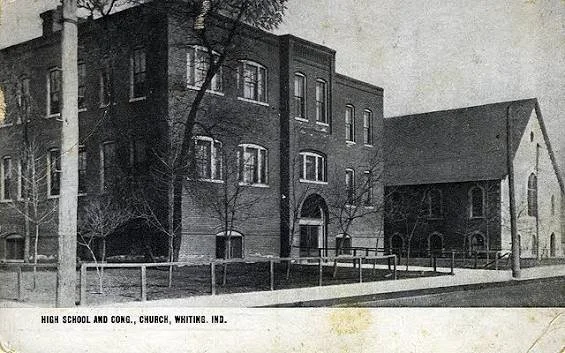
Roy Edwin Green was also a noted Whiting attorney. Green was a prominent member of the Calumet Region. During his professional career he served as Whiting’s city judge. He was involved in many social and fraternal organizations. Likewise, Green was quite successful in his law practice.
Green was a native of Chicago, Illinois. He was born on July 17, 1887. Roy was the son of Edwin and Minnie (Malloy) Green. Edwin Green was a native of Pennsylvania. Roy’s grandfather was also from Pennsylvania, where he was prominent in railroad circle for many years.
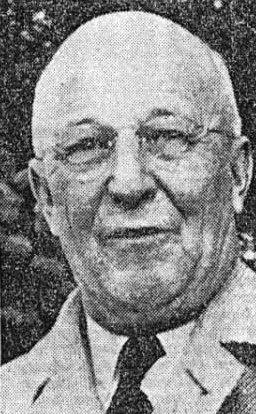
Roy E. Green
Roy’s family relocated to Whiting sometime during his formative years. Green was educated in the Whiting school system. He was a member of the first graduating class to attend Whiting High School for all four years. After he graduated from high school, Roy attended the University of Chicago. Green then went on to receive his legal degree from the University of Michigan in 1911. That same year, he was admitted to the bar.
Roy Edwin Green established a legal practice in the city of Whiting in 1912. After some time, he was elected city judge. Green held this position for two terms, serving in this capacity from January 5, 1914 to January, 1922. Prior to his election, Green served as deputy prosecuting attorney. Roy Green was active in all local movements. He served as attorney for the local war board, as well as, being active in a variety of other drives.
Green was a noted civic leader and family man. He was a member of the Chamber of Commerce, where he served as president for two years. Roy Edwin Green was also a member of the Masonic Order, Elks, Odd Fellows, Lake Shore Athletic Club and the Plymouth Congregational Church.
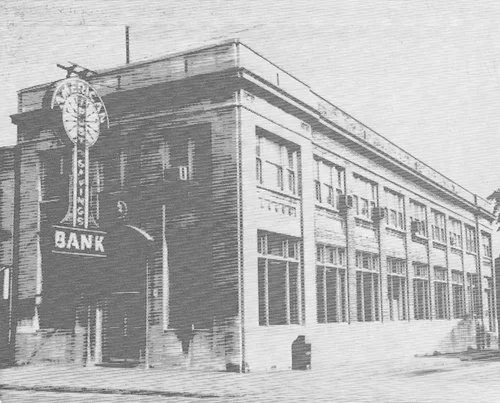
American Trust bank
In 1912 Green married Ella Klose. Klose was the daughter of Robert P. and Augusta (Trowe) Klose. Roy and Ella Green raised four children. Their children where as follows: Doris Jane, Roy Edwin Jr., Robert Klose, and Ruth Antoinette.
In addition, to Green’s legal profession, he was also involved in several business ventures. He was the president of the Mid-West Motor Company. Likewise, Green served as the president of the Danville Reo Company. He was the vice president of the Superior Oil Company located in Gary, Indiana. In addition, Roy E. Green served for some time as the vice president of the American Trust Company of Whiting.
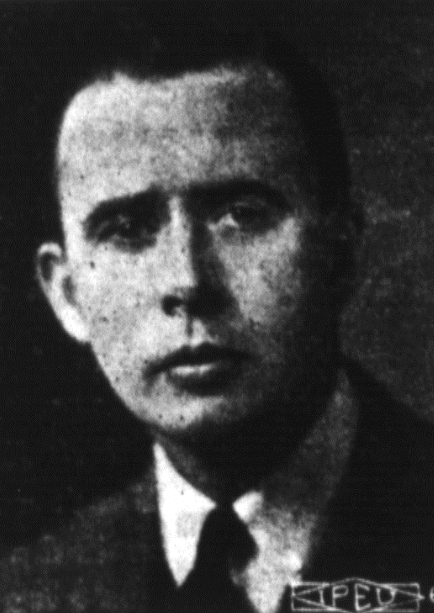
Joseph T. Sullivan
Joseph T. Sullivan was a leading attorney in this area. He was selected Whiting’s city judge in the Fall of 1921. The following January he accepted the position, which he served from 1922 to 1926. Sullivan was the first successful candidate to run on the Democratic ticket in Whiting. He was chosen for a second term, while running under the Citizens ticket in 1925. In addition, he served as Chairman of the Whiting Chapter of the Red Cross and as a director of the Whiting Chamber of Commerce, where he served as secretary for four years.
Sullivan descended from a pioneer Wisconsin family, who were among the first arrivals of the Fox River Valley. He was born on a farm near New London on August 3, 1882. His parents James T. and Elizabeth (McCaffery) Sullivan were natives of Ireland. The clan of Sullivan was once known as Sullivan Gow, which was in honor of a blacksmith ancestor. Sullivan’s ancestors’ name was originally O’Sullivan, but the prefix was dropped over the years.
Joseph T. Sullivan was one of five children, three of whom survived. He first attended classes in the “Deeshick” school. At the age of 11, his family moved to Milwaukee. However, the panic of 1893 was too hard on the family’s meager savings and they were forced to move back to New London to start over.
After returning to New London, Joseph worked at several places to make ends meet. He swept stores, delivered groceries, was employed at a printing house, worked in a drug store and managed a laundry agency. Sullivan was able to accomplish all of this while finishing up high school.
After graduation he was accepted at the University of Wisconsin, but due to financial difficulties, he had to decline. However, with the help of his uncle, Sullivan was able to attend Valparaiso University. Valparaiso, at this time, was considered “the poor man’s college.”
In 1904, Joseph Sullivan graduated from Valparaiso University with his law degree. However, he wasn’t ready to enter the legal profession just yet. In order to broaden his real life experiences, Sullivan spent the next six years as a reporter and editor for a Milwaukee newspaper. During this time, he also became affiliated with the University of Wisconsin’s extension division.
In 1910, Joseph Sullivan returned to Indiana, where he entered the law office of Frank B. Patte of Crown Point. After a period of apprenticeship, Sullivan started an active legal practice in East Chicago. Four years later, he relocated his residence and his law practice to Whiting.
Perel was educated in the public grammar and high school of Menominee, Michigan. In 1906 he came to Chicago. Three years later, Perel enrolled at the John Marshall Law School. He graduated with his law degree in 1912. Perel was admitted to the Illinois Bar the same year. In March 1915 he became a member of the Indiana Bar.
After being accepted by both bars, Perel immediately began practicing law in Whiting. In 1916 he was appointed as the deputy prosecutor by then Prosecutor James A. Patterson. Prosecutor Clyde Hunter reappointed Perel to this position. Charles Perel served in this capacity until 1918. At this time, he resigned to enter the service.
Charles S. Perel enlisted in the United States Army. During WWI Perel served in the air service branch of the Army. Perel was honorably discharged from military service on July 3, 1919. The discharge proceedings were held at Camp Taylor, which was located in Kentucky. After being discharged, Perel returned to Whiting.
Once back home, Charles Perel immediately went about establishing a private law practice. On January 6, 1930, he became Whiting’s city judge. Perel was reelected to this position in November 6, 1934. During his nine years as city judge, he had an enviable record that no appeal of any civil case was ever reversed. In addition, Perel’s record as to the punishment of drunken drivers reached nationwide attention.
Perel was also very active in civic affairs. He was a member of the Board of Directors for the Whiting Relief and Aid Society. Perel was a member of the Boy Scout council. Likewise, he was quite involved with the American Legion, which he was a commander of the post in 1924. On July 25, 1922, Charles S. Perel married Juanita Elizabeth Darrah in Champaign, Illinois.