
Bar Tenders

Anthony Borgo June 2026
At first glance, one might think that this article is about proprietors of saloons. In fact, the next several pages describe Whiting’s early attorneys. Among the many institutions of government none are of greater importance to the people than lawyers.
The public comes into almost daily contact with those who pass and uphold laws. Attorneys are concerned with protecting the liberties and rights of the people. The security of the home, freedom of religion, the pursuit of a decent and fair education, and the enjoyment of personal property all come under the supervision and control of the courts. It is therefore natural, that judges and lawyers have always occupied an important place in Whiting’s history.
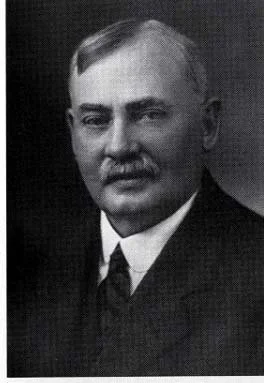
Frank Gavit
Frank N. Gavit was one of Whiting’s most prominent attorneys. He was also a founding member of one of the Calumet Region’s outstanding law firms. Gavit represented the senior member of the legal firm of Gavit, Hall and Smith. John C. Hall and Walter Smith made up the remaining law partners. Frank N. Gavit began practicing before the bar of Lake County in November, 1892.
Gavit was born in Walsingham, Ontario in 1864. He was the son of Albert and Bridget (Highland) Gavit. His father was originally from Ossining, New York and his mother hailed from the State of Maryland. Much of Gavit’s youth was spent on his father’s farm, which was located in Saginaw, Michigan. Gavit received his early education in the public schools of Saginaw.
Albert Gavit
After graduating form high school, Frank Gavit enrolled at Valparaiso University. He then went on to law school at Northwestern University. In 1890 Gavit graduated from Northwestern with his legal degree. Two years later, Gavit relocated to Whiting, Indiana, where he opened up a law firm. Frank N. Gavit was elected as Whiting’s first city judge serving from January, 1906 to May, 1906.
In 1911 Gavit forged a partnership with John C. Hall and Walter H. Smith. Nine years later, Frank’s son Albert joined the law firm. The firm was now touted as the Gavit, Hall, Smith and Gavit law offices. In 1919 Gavit and his partners opened a second legal firm. The new offices were located in Gary, Indiana.
Frank N. Gavit was elected Indiana State Senator in 1911. He was represented on the Republic ticket. Gavit served as Senator throughout the 1911-1913 sessions. He fathered many bills that helped to strengthen the State. Among these bills were legislation which helped to create a sanitary district in northern Lake County. He was also responsible for a bill, which created additional Superior Court judges for Lake County. Likewise, Gavit championed a bill, which provided the construction of streets under the Indiana Harbor Canal. He was an ardent supporter of woman’s suffrage and submitted an amendment which would provide women with the right to vote.
Gavit was also involved in many civic and fraternal organizations. He was a thirty-second degree Mason, a Shriner and an Elk. Gavit was also a member and one of the organizers of the Calumet Seaways Association. He was also a member of the United States Supreme County Bar, as well as, the local affiliations.
Thomas Cerajewski
Thomas B. Cerajewski was a long-time attorney in the City of Whiting. He was born in April, 1899 in South Chicago. Thomas was the son of Ambroze and Catherine Cerajewski. After attending high school, Cerajewski enrolled at Valparaiso University. He left the university with a LLB degree.
Cerajewski’s leadership qualities were manifested through the number of offices he held. He was the head of the Polish Professional Men’s Association of Lake County. In addition, Cerajewski served as President of the Whiting Bar. For 11 years, he was deputy prosecuting attorney for the city of Whiting. He was also a past legal adviser for the Whiting Relief and Aid Society and past President of the Board of Directors of Community Service.
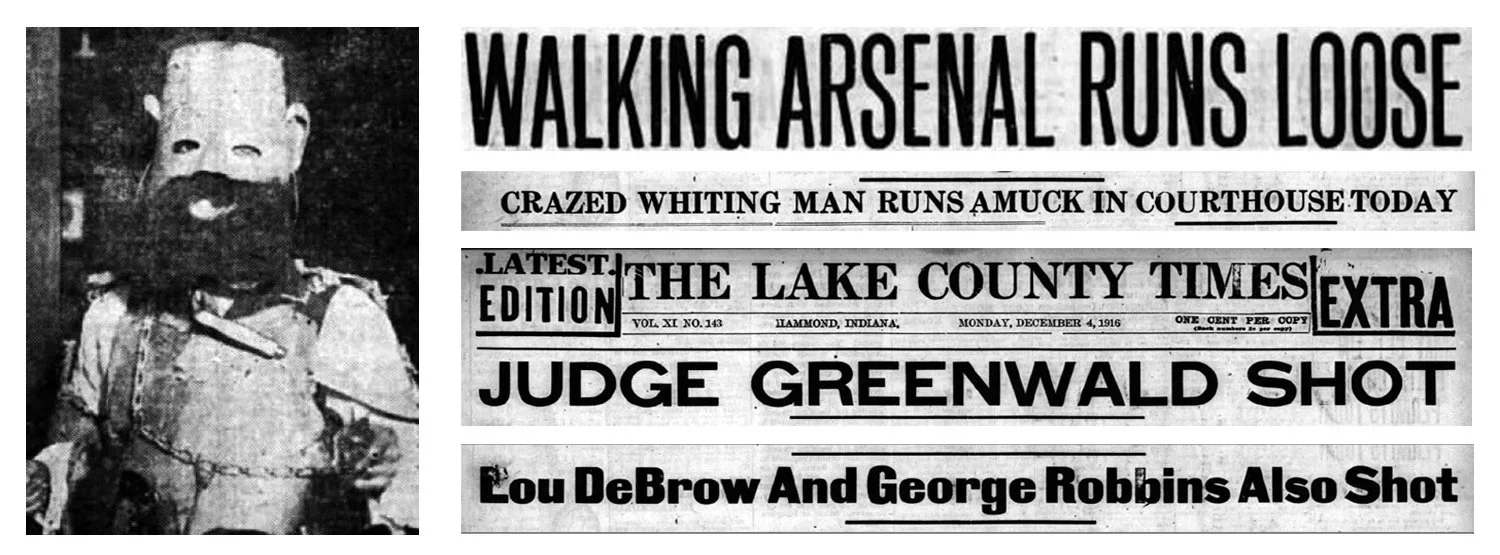
Frank N. Gavit only served as Whiting’s city judge for four months. Charles E. Greenwald succeeded him. Greenwald was appointed in May, 1906. He served in this capacity until May, 1908. At this time, John E. Westfall was elected city judge. Westfall’s term lasted until January, 1910. John E. Westfall was born in 1877. In 1909, when he opened his office at 528 119th Street, he was Whiting’s city attorney.
One of Frank Gavit’s partners was Walter H. Smith. Smith was a widely known attorney throughout the Calumet Region. He was born on April 5, 1891 in Laporte, Indiana. Smith was the son of Fred J. Smith. Fred J. Smith was Whiting’s second mayor serving from 1906-1910.
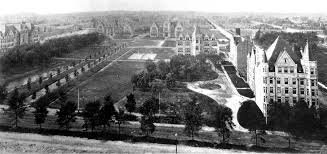
University of Chicago
Walter H. Smith was educated in Whiting’s public schools. After high school graduation, he enrolled at the University of Chicago. Smith left the University of Chicago with a Ph.D. degree and Doctor of Jurisprudence. He attended the University from 1913-1915. While attending the University of Chicago, Smith won several oratorical contests as a member of the debating team. Through his work on the debating team, he was awarded a number of scholarships.
Smith was admitted to the bar in 1914. Shortly after being admitted to the bar, Walter Smith began practicing law. At this time, he joined the legal office of Gavit and Hall. Some time later, Smith became a partner of this law firm.
On May 12, 1917 Smith married Jessie Marie Curtis of Whiting, Indiana. Curtis was the daughter of William and Isabelle (Chalmers) Curtis. Jessie’s parents were residents of Whiting for more than 30 years. On the same day of his wedding, Smith was accepted for military service. He spent two years in the army, serving one year in France.
The third member of the famous Gavit, Hall and Smith partnership was John Calvin Hall. This legal firm was one of the leading law offices in the region. In addition, this law firm represented many of the leading banks, realty companies and industrial giants in Lake County. Likewise, Hall was prominent in several activities throughout the Whiting community. He served as director of a number of organizations. Hall served as Whiting’s City Judge from January 3, 1910 until January, 1914.
John Calvin Hall was a descendent of a compatriot of William Penn. Hall’s great-grandfather was Samuel Hall, who was born in England and came to American with William Penn. John Calvin Hall was born on April 13, 1872 in Downs, Illinois. His parents were Calvin S. and Rachael (Eberhardt) Hall, both of whom were born in Uniontown, Pennsylvania.
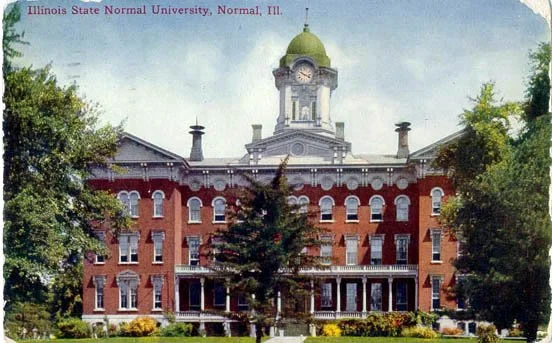
Hall was educated at Kickapoo High School in Downs, Illinois. After high school, he enrolled at the Illinois State Normal School, where he obtained his undergraduate degree. After some time, Hall entered the Kent College of Law. In 1907 Hall received his legal degree from Kent College. Three years later he was admitted to the bar.
Prior to attending law school, John Calvin Hall served as a principal of the Whiting schools. He served in this capacity from 1900 to 1904. In 1904 he accepted the position as superintendent of the Whiting School System. Hall held this position from 1904-1910, while attending law school.
John C. Hall held a lifelong teaching certificate in both the states of Illinois and Indiana. In 1910 he established a law practice in Whiting. The following year he became a partner with Frank N. Gavit. John C. Hall served as Whiting’s city judge from 1918-1922. In addition, he also served as Whiting’s city attorney.
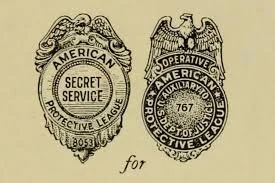
During World War I, John Calvin Hall was quite involved. He was especially active as a member of the legal advisory board. He also assisted in the promotion of the Liberty Guards, in which he received a commission as lieutenant colonel. Hall was also chairman of the Red Cross membership company and due to his efforts Whiting ranked fourth in percentage of membership. In addition, he was a member of the American Protective League, which was a branch of the secret service.
Check back for the continuation of the history of Whiting’s attorneys.