
Things We Did In Whiting Years Ago
Episode 1: Badger fights
In the 1890s and the first few decades of the 1900s there were many things to gamble on in Whiting-Robertsdale and its surrounds. Most of them were illegal, of course. You could bet on horse races, cards, dice, baseball games, prize fights and more, even occasionally on badger fights.
Badger fights were described as cruel, violent, bloody affairs. They were usually held in connection with larger, more sophisticated events. Newspapers widely promoted the fights in advance, as well as the events of fight night the day after the match. The articles often reported in detail what went on right up until the badgers were released, but they were completely devoid of any unpleasant details of the combat, and for good reason.
One key feature of the fights took place before every contest, that being the careful selection of a referee, because it was understood that considerable money was usually at stake. Rumors as to who the referee might be could sway early betting in one direction or the other. The referee had to be a man who, under pressure, would be able to display both his courage in the ring and unquestionable fairness in the face of disputes. Courage and fairness, of course, were qualities many young men would proudly claim to possess, if called upon.
Generally speaking, there were two types of badger fights, man-versus-badger and dog-versus-badger.
***************
Here are examples of two local matches, both taken from reports in the Lake County Times, one of the papers that regularly promoted the events.
As you read these two accounts, bear in mind that they took place more than a century ago. If the very notion of badger fights is new and abhorrent to you, you might find it hard to understand how such savagery could exist. Every attempt has been made here to keep this report from being too lurid for our readers, and you should find it worth reading if you stick with it until the end.
The first account is of a man-versus-badger match in 1908.
Prior to the fight, The Times reported news that had already been circulating around town. A man-versus-animal fight would soon take place at a secret location in East Chicago.
The match was arranged after a young, black man named Griffith Reed claimed he “could lick any animal in the country.” Reed stipulated that he be allowed to use “regulation West Baden leggings, buckskin gloves, a baseball mask, chest protector and a club twenty-four inches long and two inches thick.” It was decided the animal Reed was to fight would be a badger, “the most vicious and ferocious animal” known.
Reed was “in the pink of condition,” having trained for weeks doing six mile runs each morning and rope jumping in the afternoon.
G.M. Roland was the promoter of this fight. He had already turned down a flattering offer from a New York movie firm that wanted to film the event.
After a large amount of early money was said to have already been wagered, there was nearly a riot owing to a rumor that Reed had been “pickled” by his manager with an Indian medicine that could render a man invulnerable to bites and scratches. This rumor was flatly denied by all parties interested.
Sheriff Carter and Police Chief Higgins vowed to prevent the fight from taking place anywhere in Lake County.
The fight, however, was held and the Times reported the following the next day:

The doors of the large dining room of the old Reiland hotel were thrown open at nine-thirty and a crowd of about three hundred filed in. Soon Reed entered, to an immense ovation, with his trainer at his heels. He wore a long, blue robe and a loose smile. While he appeared a bit nervous, there was no indication he intended to welch. Almost immediately a bettor stepped into the ring and offered $100 on the badger, which was instantly snapped up, triggering a round of betting.
Suddenly Sheriff Carter and his deputies burst in through one of the side entrances. Carter informed the crowd that he had the place surrounded and every one was under arrest. He read a warrant and slipped a pair of handcuffs on Reed.
After a long, heated argument, Mack Foland was seen handing Carter something that seemed to change his ideas about enforcing the law. Having been paid off, Carter and his men retired to loud cheers from the crowd. Reed stood up and assured the bettors, “Gentlemen, they ain’t money enough made to buy me.” More cheers.
The badger was brought in in a barrel. Reed was stripped of his robe and shown to be in full armor. Immediately, protests and a shouting match arose over what he wore. The referee bravely did a good job of settling the details. Betting was ended. The word was given and Reed pulled the chained badger out. “With one mighty swing of his bat he annihilated that badger beyond all hope of future usefulness. Nothing remained but the chain and collar to tell the sad tale.”
***************
The second story described a dog-versus-badger fight from that same year.
This fight was sponsored by The Fraternal Order Of Eagles at the conclusion of its annual state meeting, held in Hammond.
It had been promised that the fight would be “bloody, and on the square with a referee like Oscar Fletcher.” Mr. Fletcher, an Eagle who had come up from Rushville, Indiana for the convention, vowed to do his best. He had consented to do the job after Eagle Dave Hirsch had talked with him for two days about how important it was to have a fair judge.
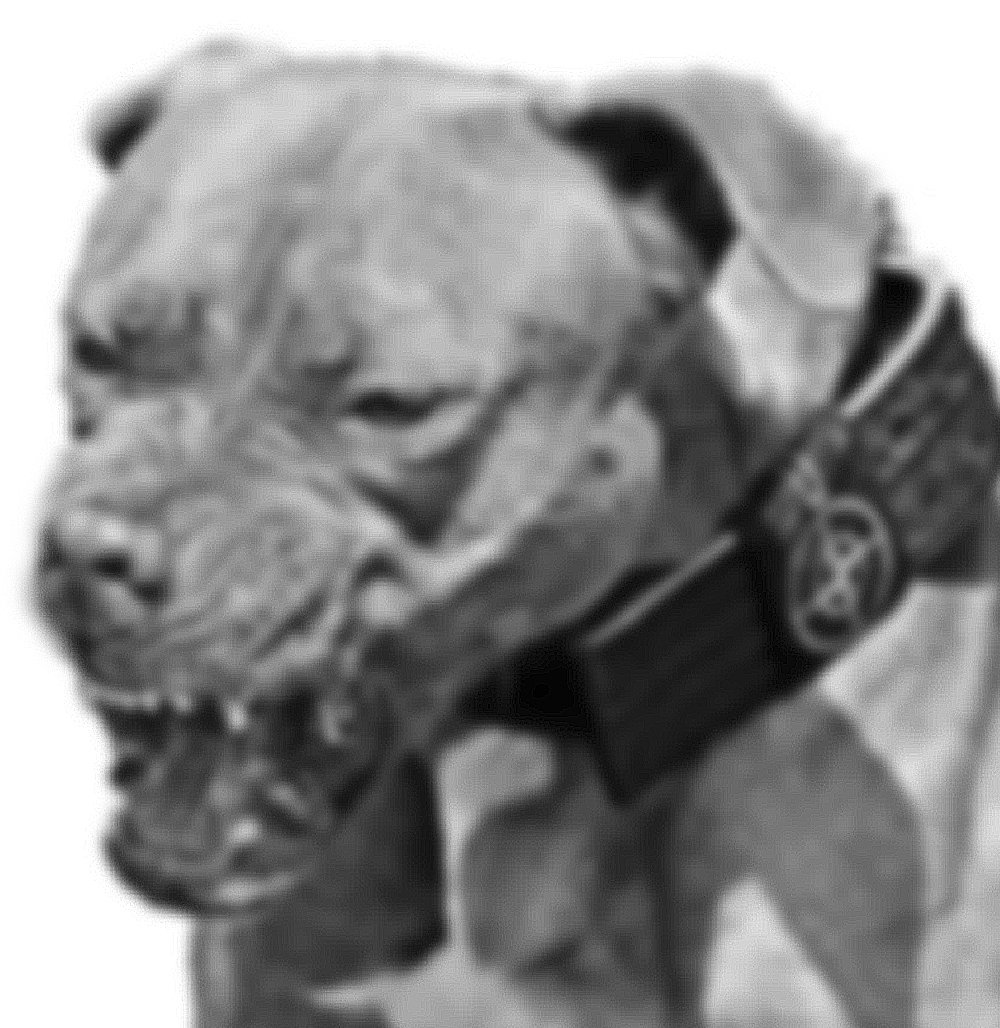
At the appointed hour, in the Eagles’ clubroom, Judge Roland announced that the fight, between a vicious bulldog and a ferocious badger, was to begin. A fresh round of betting began. The ring for the contest was cleared. Frank Roth’s full-blooded bulldog was led in as George Hanlon, the Judge’s bailiff, wrapped referee Fletcher in towels in order to protect him from the blood which might be spilled.
Frank Williams, a veteran fight manager, took the floor and explained the principles of the fight. He expressed his confidence that Fletcher could be counted on to be eminently fair. He also admitted the event was against the law, and ordered all the doors to be locked, which was promptly done. Last minute betting continued apace.
Now, referee Fletcher appeared nervous over his responsibility for the amount of money that was about to change hands. He questioned what kind of maniacs the people of The Region were to go crazy over such a bloody sport, when the people of Rushville had never even heard of such a thing.
The crowd’s frenzy grew as bets were coming thick and fast. Fletcher rose and loudly implored that all the bets should be called off, but already the bulldog was tugging at its chain as the badger, still in his box, was being carried into the ring. The fight manager called for timekeeper Dave Hirsch to get ready, when a bettor shouted that Hirsch had bet big money on the badger, and mayhem ensued. Referee Fletcher tried to intervene but was caught up in the chaos. Somebody handed him the chain that was tied to the neck of the badger, which was still in the box. He wrapped the chain around his hand, and as he did, Hirsch hollered, “GO!”
The door of the badger box was flung open. Fletcher gave the chain a vicious pull. The badger flew directly towards the dog’s corner. Fletcher watched for a second, then turned white at what he saw, and dropped the chain. He tried to speak, but his voice was drowned out by the roar of the crowd. Slowly he removed his improvised leggings and towels, and received congratulations for his fearlessness. It was over, and was a success.
***************
There were many such fights in The Region in that era. The key to their popularity was secrecy. Not secrecy about their times, locations and participants, but about the fact that every fight was actually a hoax.
They were fun events put on as fundraisers for the organizations that sponsored them.
There were no badgers. The lawmen who would burst onto the scene were “bribed” with stage money. The bettors, too, were all in on the gag. They “bet” real money though, knowing it was not a wager but a donation to the sponsoring organization.
The only people not aware of all this were the poor referees. That is why so much care was taken to select the right victims, like poor, innocent Mr. Fletcher from Rushville; victims who could be completely duped if everything was done right; hopefully victims who knew how to take a joke.
What the unknowing referees hauled out of the badger boxes was always an old, beat up toilet, or its pre-indoor plumbing counterpart, a chamber pot. The more gobsmacked the referees were, the bigger the roar of laughter was, and the better was the chance for a good story to be told over and over.
***************
And now, a promise: If, as you read this story, you had no idea what was really going on, don’t be embarrassed. If you were more referee than hoaxer, if you started believing that early Whiting-Robertsdale folks were barbarians, don’t be ashamed. No one will hold it against you.
But a word of caution: If you should ever get invited by your friends to join them on a snipe hunt, you might want to think twice before accepting the invitation.